
Celebration of Learning 2026 showcases student/faculty research
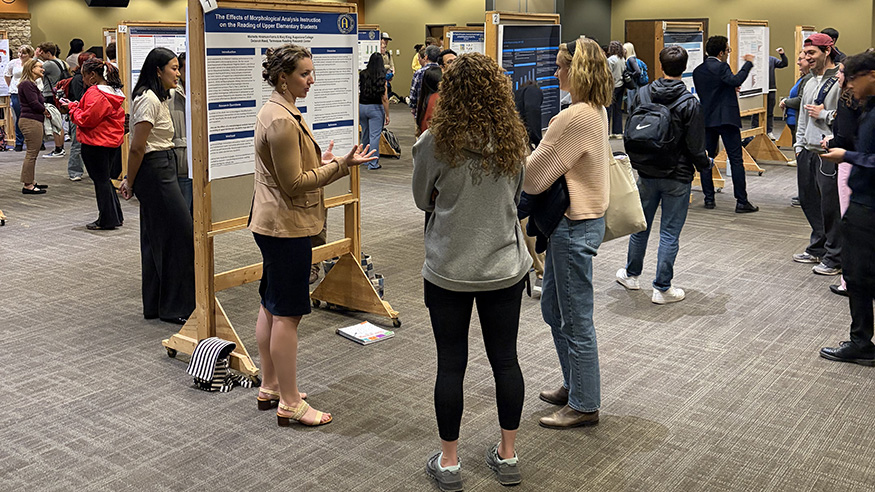
Students presented their research in one of two poster sessions during the day.
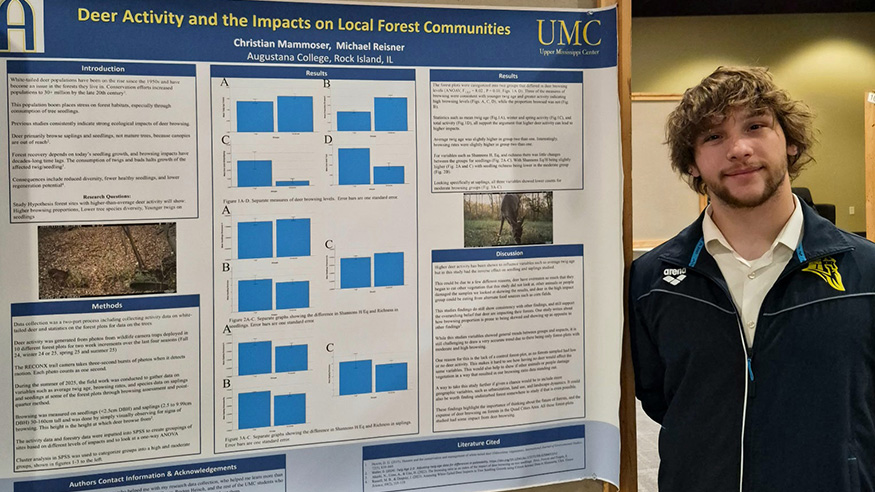
Christian Mammoser '26 – "Deer Overpopulation and its Effects on Local Forest Communities”
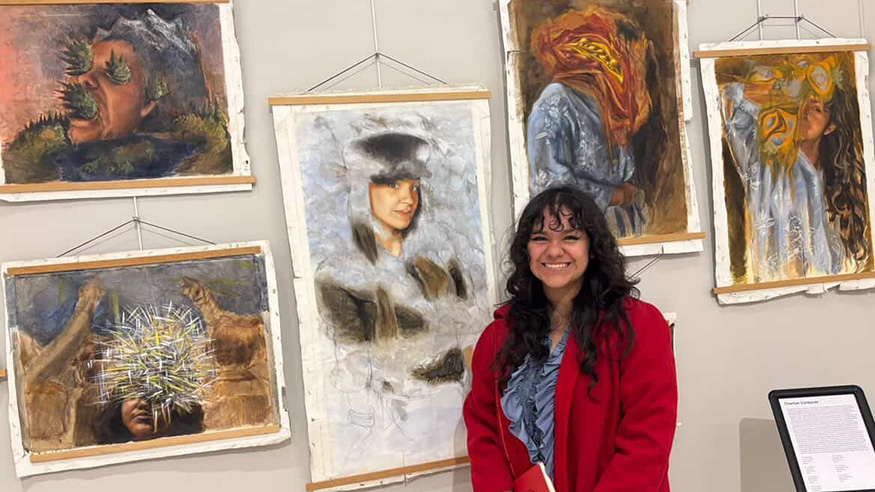
Charlize Cardenas '26 in the Art Show
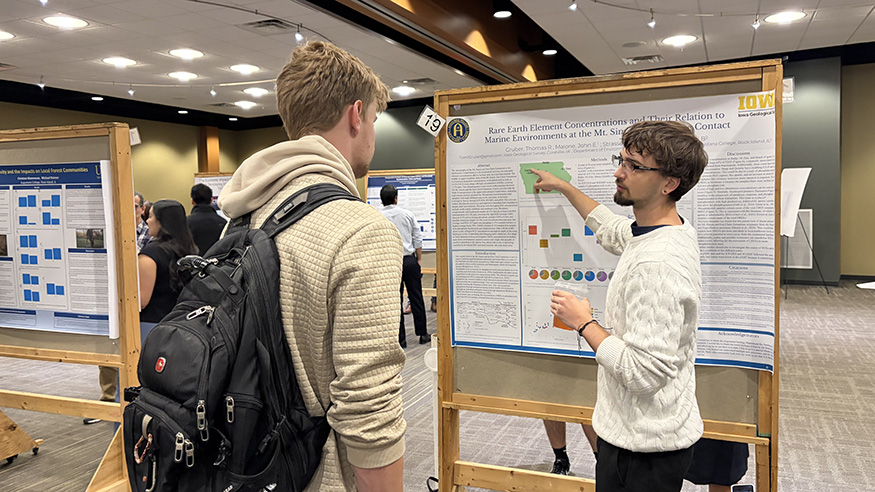
Tom Gruber '26 – “Rare Earth Element Concentrations and Their Relation to Marine Environments at the Mt. Simon - Eau Claire Contact”
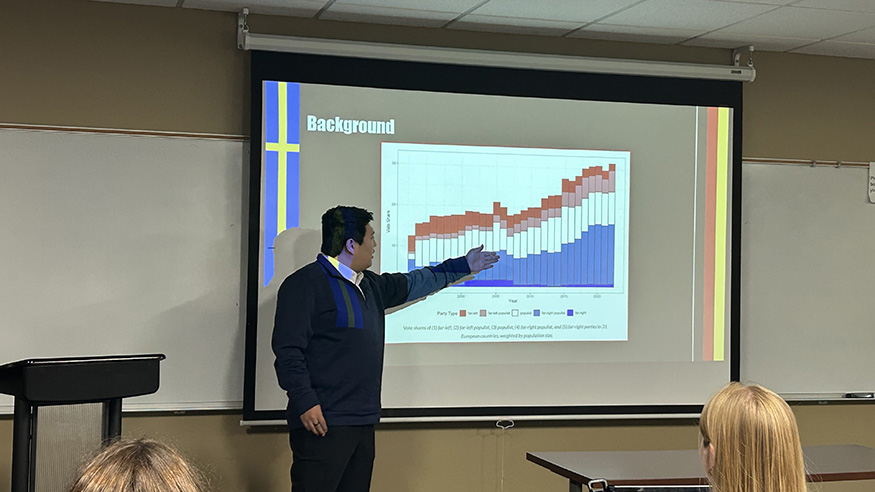
Aiden Koehne '26 – "Rise of the Right: An Analysis of European Right-Wing Populism's Success in Germany and Sweden"
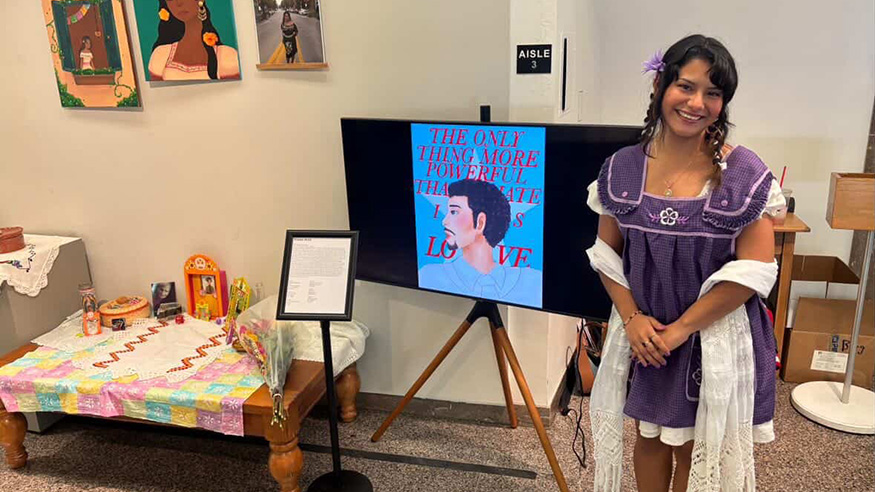
Noelia Avila '27 in the Art Show
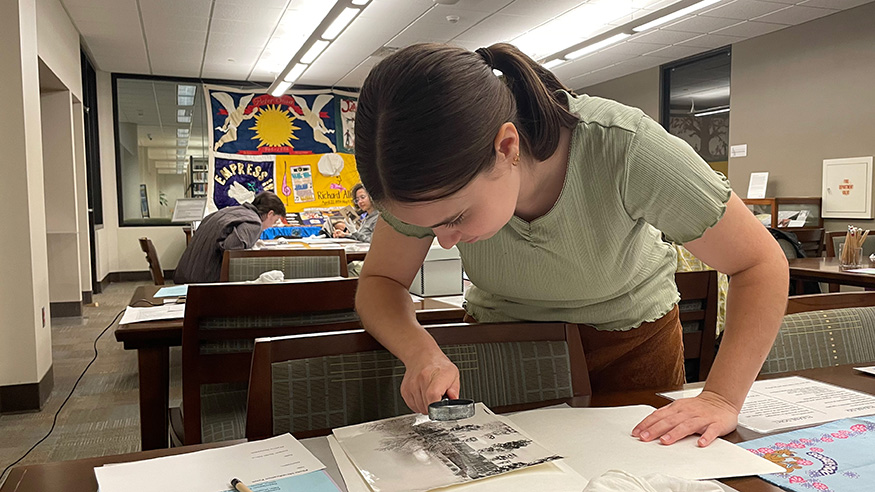
Kat-Jean Glusick '26 (pictured), Kaitlyn Goss-Peirce (librarian), Micaela Terronez (librarian) and Madeline Kusar (Special Collections assistant) – "Workshop: So You Wanna be a Citizen Archivist: Unraveling Hidden Stories One Record at a Time"
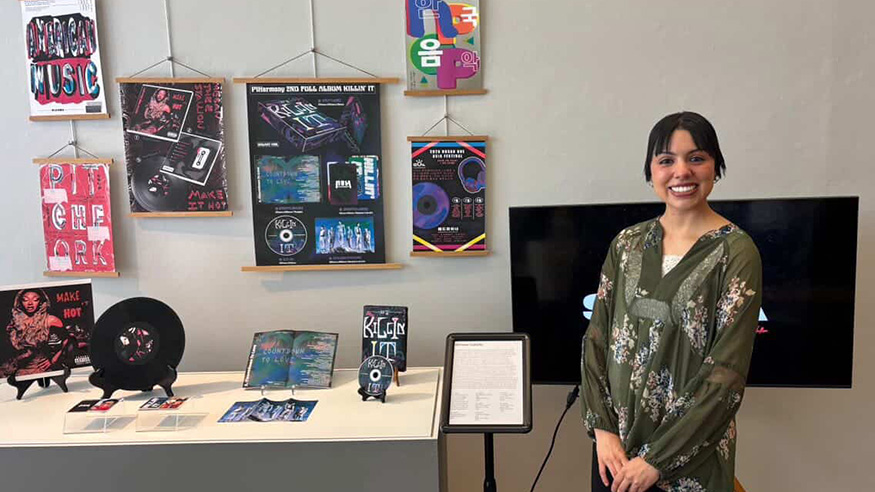
Marlene Cabada '26 in the Art Show
From turtle biology and housing reentry research to global economics and Monopoly-inspired lessons on happiness, Augustana’s Celebration of Learning 2026 highlighted the curiosity and creativity of students across disciplines.
This year's celebration on May 6 included poster presentations, interactive sessions, an art show, panel presentations and special events, including the four below:
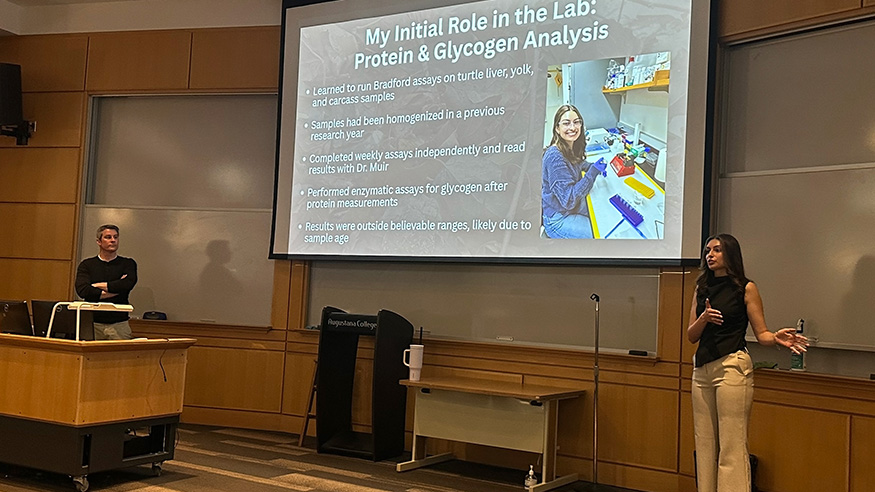
"Summer Student Research Fellowship: Tracking Residual-Yolk Energy in Hatchling Turtles from the Slough"
Presented by Aliza G. Salinas-Cervantes ‘26 and Dr. Tim Muir, biology
For Aliza Salinas-Cervantes ’26, faculty-mentored research became a defining part of her Augustana experience. During her presentation, the biology/Spanish for professional use double major from Mendota, Ill., explored why hands-on research opportunities are valuable experiences for STEM students while sharing her own research journey alongside Dr. Tim Muir, professor and co-chair of biology.
Their research focused on painted turtle hatchlings and how they survive seven months without eating after hatching in late summer. By tracking changes in mass and energy stored in the yolk, liver and body, the researchers found that hatchlings rapidly move energy from their residual yolk into other body stores soon after hatching — a process that requires significant energy but may be essential for surviving the winter underground.
The research grew into a summer fellowship and multi-year faculty-mentored experience, giving Salinas-Cervantes the opportunity to conduct in-depth scientific research and present her findings.
“My biggest takeaway from faculty research is the amount of learning I’ve done,” said Salinas-Cervantes. “I don’t think that if I had gone to a bigger school, I would’ve been able to do as much with this project, learn so much and stay involved in it for more than two years.”
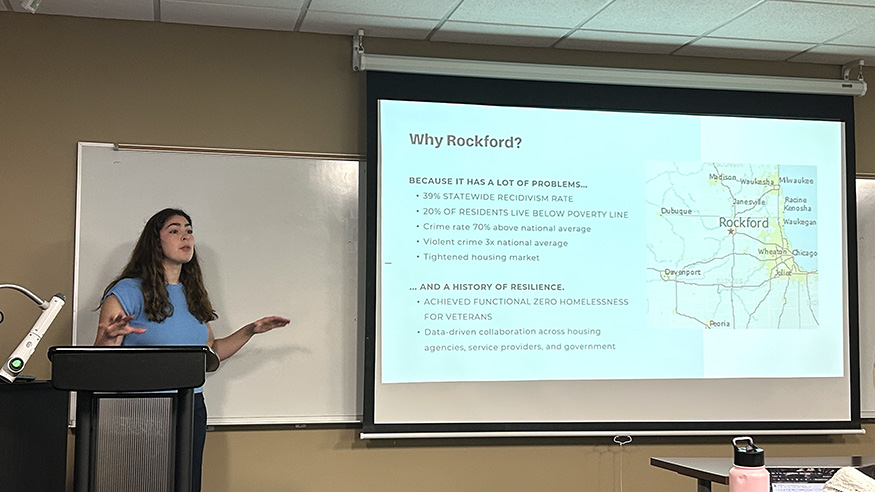
“Housing Pathways for Formerly Incarcerated Individuals: A Case Study of Reentry Resources in Rockford, Illinois”
Presented by Genevieve Ryan ’26
Advisor: Dr. Mariano Magalhães, political science
Every year, more than 600,000 people leave prison in America and face the immediate challenge of providing a permanent address to their parole officer. For many, that address doesn’t exist, and it’s nearly impossible to build a life until it does.
Genevieve Ryan, a political science, Spanish and communication studies triple major from Rockford, Ill., researched how her hometown is responding to that challenge.
Through interviews with local service providers and analysis of policy documents, she mapped the housing landscape people navigate after incarceration, from emergency shelters and supportive housing programs to federally subsidized housing and the private rental market.
Ryan found that wraparound services and relationship-based outreach significantly improve housing stability. Strong partnerships among nonprofits and local government and robust referral networks have produced meaningful outcomes for clients who are often difficult to reach.
At the same time, persistent challenges remain. Many organizations depend heavily on public grants and private donations, constraining their capacity to expand services and often leaving needs unmet. Organizations also struggle to gather feedback and data on client outcomes because of resource constraints, according to Ryan.
In the private housing market, high costs, restrictive background checks and a lack of suitable housing stock further complicate efforts to house individuals re-entering the market.
Ryan hopes her findings will help her local government better understand the system’s strengths and weaknesses to inform decision-making.
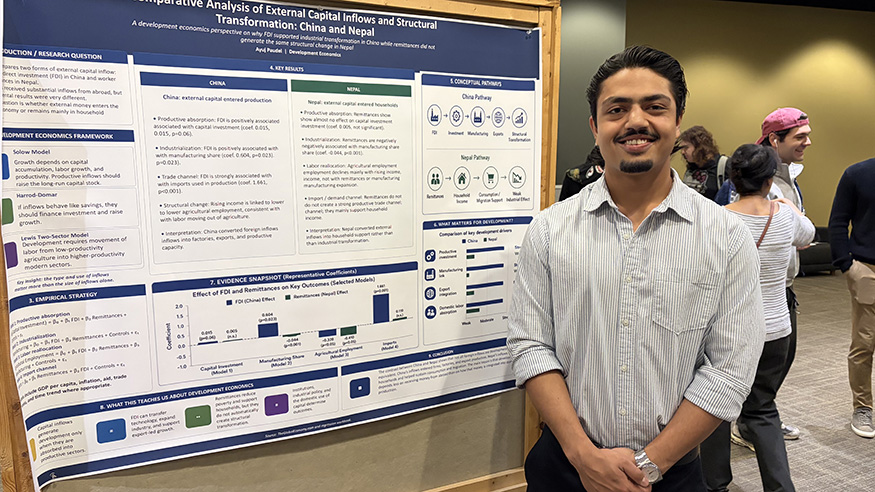
“From Capital Inflows to Structural Transformation: Why Development Outcomes Diverge Across Economies”
Presented by Ayuj Paudel ’26
Advisor: Dr. Chris Marmé, economics
Why do some countries develop while others do not, even when both receive foreign investment funds? “That’s been a burning question for me, and now that I’m in my senior year, I’ve found some clarity,” said Ayuj Paudel of Nakhu, Lalitpur, Nepal.
By comparing foreign direct investment (FDI) and structural transformation in China and Nepal, Ayuj analyzed why not all foreign inflows lead to the same level of development. He found that China directs FDI toward firms, factories and export production, while Nepal often channels external investment into household support, including buying food, paying school fees and building homes, rather than industrial transformation, such as building textile factories that create jobs and produce exports.
Through his analysis, Paudel concluded that when FDI is invested in job-creating and productive sectors — including factories, businesses, farms, infrastructure and exports — it can drive long-term economic growth. However, when investment is primarily used for everyday consumption or does not generate new production, it contributes less to sustained development.
Paudel, who is studying business administration-finance, economics and accounting, hopes to become the prime minister of Nepal one day. He believes the country could benefit from directing more FDI toward tourism, agriculture and hydropower. According to Paudel, becoming more self-sufficient would strengthen Nepal’s economy and help spur the development it needs.
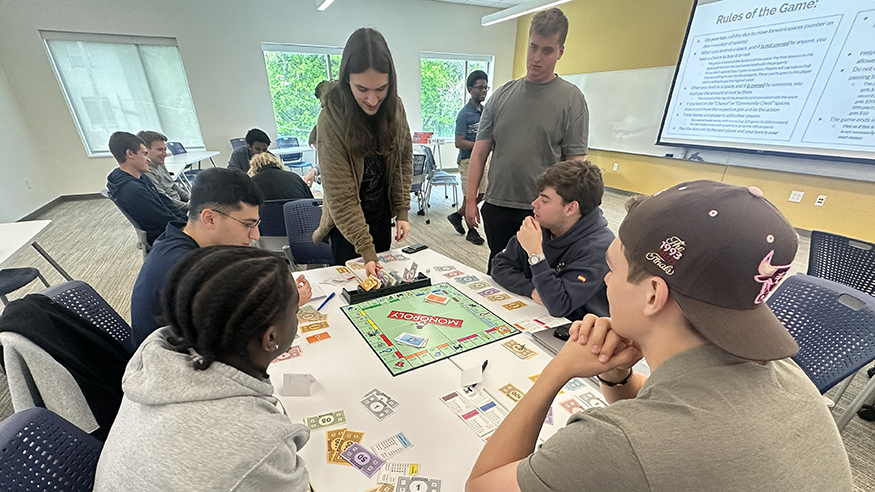
From the bottom left, counter-clockwise: Jamar Taylor ‘29, George Khachaturov ‘29, William Gabrielsson ‘29, Alvaro Sierra ‘29, Declan McCarthy ‘29
“Does Wealth Equate to Happiness? Monopoly, Consumerism, and Lasting Pleasure”
Presented by Bianca Barbosa ’29, Da'Vonte Heckman ’29, JJ Tsagalis ’29 and Samuel Williams ’29
Advisor: Dr. Wendy Hilton-Morrow ’94, communication studies
This interactive presentation by Bianca Barbosa, Da’Vonte Heckman, JJ Tsagalis and Samuel Williams used the board game Monopoly to encourage attendees to change their perspective of wealth equating to happiness. In their research, the students discovered that the more people prioritized money and possessions over relationships and connection, the lower their level of well-being.
To support the presenters’ findings, attendees played Monopoly, but with a set of adjusted rules. The attendees had to play as if it were real life. They could help a player pay rent or pay to get another player out of jail, and the winners were not necessarily the players with the most money.
At the end of the game, each table added how much money each player had and used a formula to calculate the two averages. The players whose totals fell within the ranges were the winners. The winners were also the players who more often chose relationships and connections over accumulating possessions.
Through the game experience, students learned that awareness and action can lead to lasting happiness (represented by enjoying pieces of candy), while consumerism can lead to short-term happiness and may harm meaningful human connections.