
My authenticity and vulnerability in the classroom at Augustana
by Dr. Robert B. Tallitsch
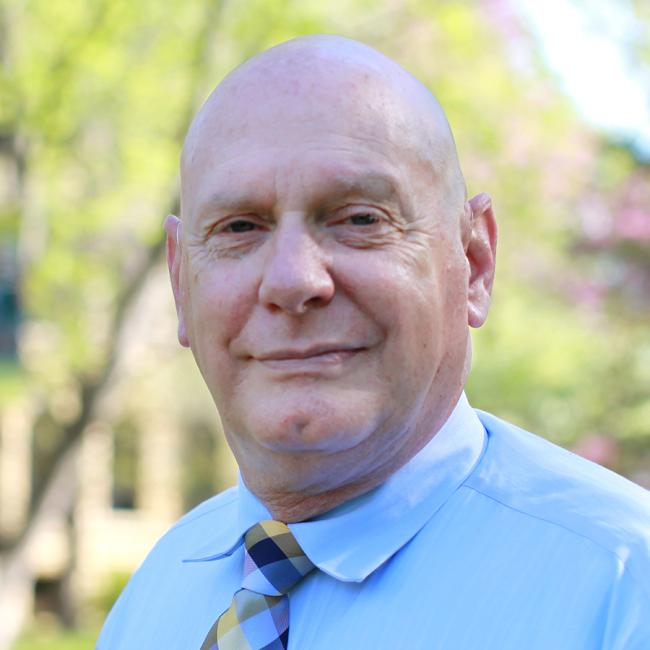
Dr. Robert B. Tallitsch is a professor emeritus of biology at Augustana College.
Mitch Albom, in his text “Tuesdays with Morrie,” has the following quote from Henry Adams at the end of one chapter:
"A teacher affects eternity; he can never tell where his influence stops."
I started teaching at Augustana in the fall of 1975 as a newly minted Ph.D. at the ripe-old age of 24. In the first class of my career, I introduced myself as “Dr. Tallitsch.” One student mumbled under her breath that I couldn’t be the professor, in that I looked like a kid. I heard her comment and acknowledged it with a chuckle and a polite reply: “If I don’t look old enough to be a professor, then how about you call me whatever you feel comfortable with? Call me ‘Bob,’ ‘Dr. Bob’ or ‘Dr. Tallitsch.’ It doesn’t matter, if you respect me as your professor.” From that day forward almost every student I had in class called me “Bob” or “Dr. Bob.”
As I was preparing the course information sheet for my very first class, Dr. Ralph Troll, one of the senior members within the department and am amazing mentor, reviewed my learning objectives for the course and what I expected of the students. After he told me what I had listed was “excellent,” I asked “Is it ok if I tell them what they can expect of me as their professor?” Ralph politely stated that if I thought it was important to do so, do it.
From that day forward, that is what I did in every class I taught at Augustana. I felt then, and I still feel now, that it isn’t appropriate to list what I expect of my students without telling them what they could (and should) expect of me. So, for all of my 43 years teaching at Augustana, some variation of the following statement appeared on every course information sheet:
I am a firm believer that a college education is a two-way street. As a professor, I hope you learn things from me. However, I also hope that I will learn things from you. In addition, I don’t think it is appropriate to list what I expect of you without telling you what you can (and should) expect of me.
What followed was a list of approximately 11 things that I would strive to do each and every day in order to facilitate my students’ learning. I did this because, as a professor, I firmly believed that:
- It was important, from the very first day of class, for my students to know the authentic and vulnerable me. And, by doing this, students would become comfortable with me knowing them as authentic and vulnerable people as well.
- My students would learn better if they knew me not only as a professor but also as an individual who truly cared about them as students and as people — both in and out of the classroom.
- If you know your students as people, and they know and trust you because of the authenticity and vulnerability you show in the classroom, they are more likely to open up to you with information that is affecting them and, therefore, impacting their learning and their life overall. You may not be the correct person to offer them the professional help that they need, but you will be able to inform them of school resources that either they were not aware of or were unwilling to utilize before talking to you.
“To be open to criticism or attack” is the definition of vulnerability, as put forth by Cloud (1992). Cloud explains that “emotional vulnerability” is allowing one’s true self to be known, including the imperfections, weaknesses and shortcomings. This is accomplished by mutually sharing one’s emotional vulnerability which, ultimately, results in a deeper level of bonding between two individuals. When professors approach their interactions with students by demonstrating a spirit of vulnerability, which involves caring, empathy, generosity, respect, reciprocity and a genuine desire to get to know the students personally, students almost always respond with increased levels of self-confidence, autonomy and resiliency.
I exhibited a level of authenticity and vulnerability in my interactions with every student I encountered. As a teacher you never know what is going on in a student’s life that is affecting their ability to learn. One needs to be compassionate and open themselves up so that, if they want, students will let you into their lives and, as a result, you can help them in the classroom.
Numerous everyday circumstances can and do impact a student’s ability to learn in high education today. Governmental issues of gender equality, being an international student, being a minority and/or a first-generation college student can impact a student’s chance of success in college. I strove to understand who my students were in my classes — to get to know them personally and academically. I worked to know them and demonstrate that I cared about them as students and that I believed that they could and would succeed in my class. I believed that they would learn better if they knew me both as a professor and as an individual.
A mentor of mine, and one of the best teachers that I ever knew, told me this: “Students wouldn’t give a darn what you know until they know that you give a darn.” Each and every day of my career I strove to show my students that I gave a darn, that I cared about them by being authentic, by demonstrating vulnerability and by striving to get to know them, both in and out of the classroom. That is how I tried to be the best professor I could be each and every day during my time at Augustana.
Album, M. (1997) “Tuesdays with Morrie.” New York: Doubleday.
Cloud, H. (1992) “Change your life with changes that heal.” Grand Rapids, MI: Zondervan Publishing House.
About the Reclaim Relevance essay series
Reclaim Relevance is Augustana’s new reflective essay series, designed to bring the voices of our educators into the public square. At a time when the value of higher education is under scrutiny, these essays will demonstrate how Augustana’s scholars connect timeless learning to today’s most urgent questions.
If you're an Augustana educator and would like to contribute to the series, you can submit your essay online.
Reclaim Relevance is an initiative of the Futurist Thinking Series, which invites big ideas and bold questions examining the future of education, leadership and human thriving.