Bringing Augustana to Silicon Valley


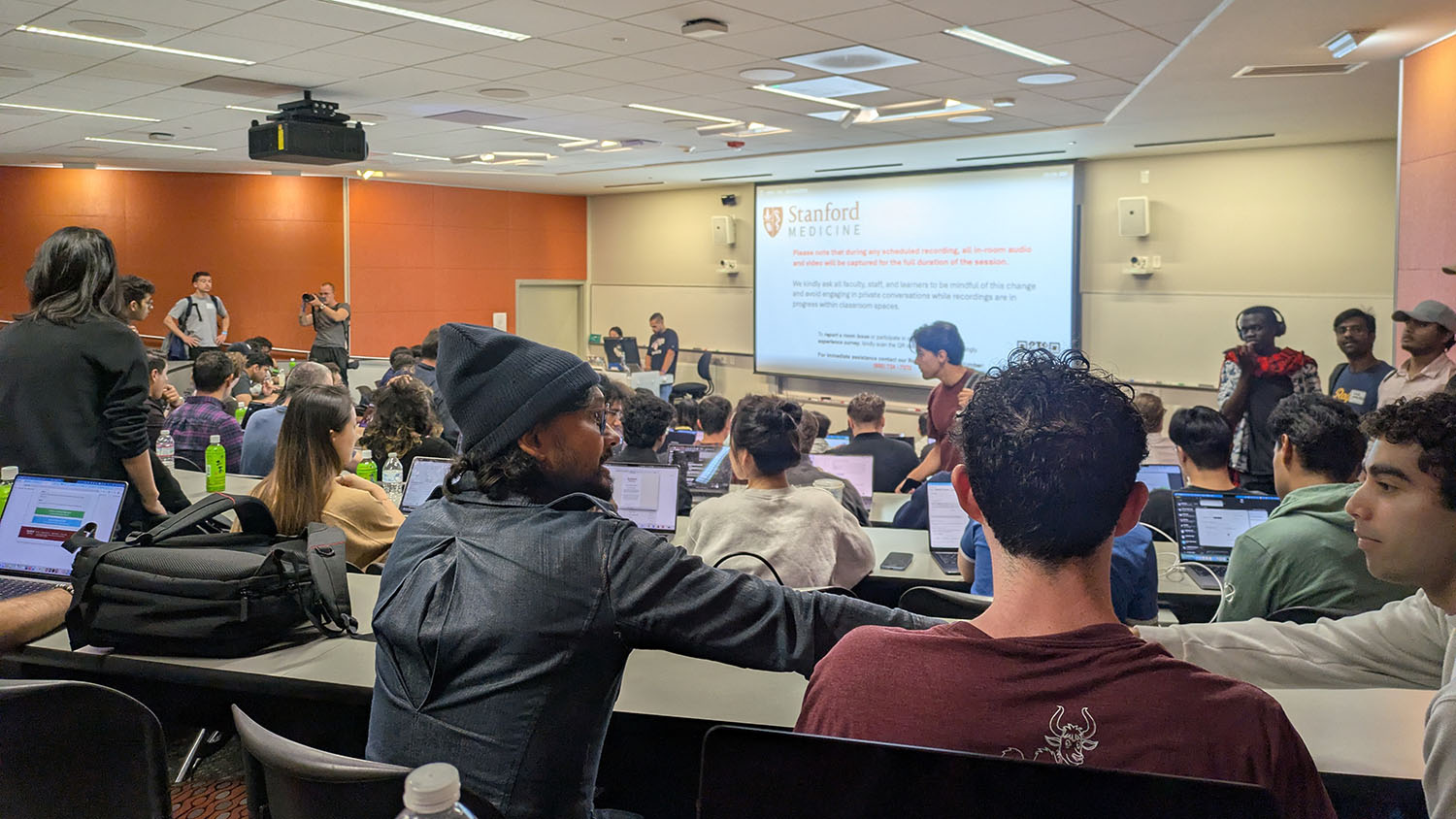
This past summer, I had the pleasure of working at Stanford University as an NVIDIA Machine Learning Instructor with iD Tech,a company that offers summer technology camps and pre-college programs for teens. The opportunity began as a thought. Through hard work, persistence and, most importantly, a connection, it became a reality.
I learned about the position through my friend Leroy, another Augustana student who had worked there the previous summer. He spoke highly of the opportunity. Beyond the Stanford name, he said the job would bring a new perspective, a steady workload, and significant technical and professional growth. At the time, it sounded almost unreal. Teaching NVIDIA AI and machine learning at Stanford, in the middle of Silicon Valley, was exactly the kind of opportunity I had hoped I could experience someday.
From Rock Island to Stanford
Moving from Augustana to Stanford was a much bigger transition than I had expected. Silicon Valley has a reputation for being intensely competitive and deeply connected to the technology industry. Stanford is often seen as a pipeline into Silicon Valley. Coming from a small liberal arts college in Rock Island, Ill., I was excited but also anxious. I wondered whether I would fit into that environment and whether the skills I had developed at Augustana would actually translate once I was there.
But unbeknownst to me, a single familiar face would help me feel grounded, stay true to my goals and bring out the best in myself.
A connection far from home
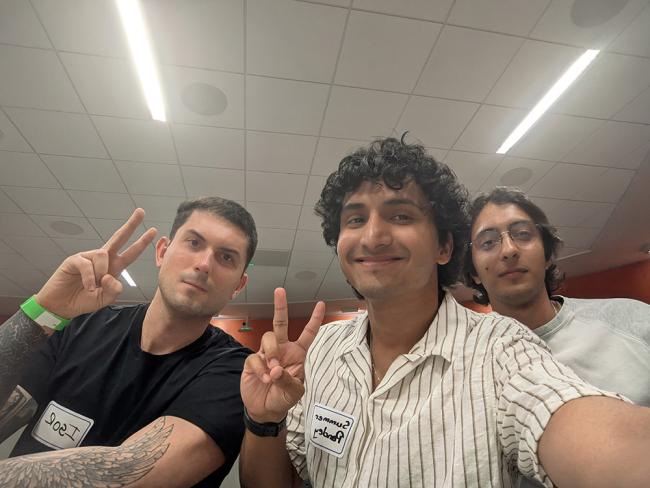
Having my friend Leroy from Augustana already there gave me something familiar to hold onto. It also made me realize something I had never really appreciated before: Augustana students and alumni are everywhere. Because our campus is relatively small, you become familiar with so many people, even those you seldom interact with. There is usually some shared class, professor, club, friend or experience connecting you. Suddenly, thousands of miles away from Rock Island, that small-campus familiarity felt much more meaningful.
But the biggest realization came once I actually started teaching.
More than technical skills
Of course, Augustana had given me the technical foundation I needed. My double majors in computer science and data science helped me understand the underlying nuances of machine learning, computer vision and NVIDIA’s intricate AI systems.
But strangely enough, those were rarely the skills that stood out.
Augustana had also required me to sit in classrooms where I studied history, religion, language, art, literature and poetry. Sometimes, as a computer science student, it was difficult to understand why those classes mattered to what I wanted to do professionally. At Stanford, I started understanding why.
I was working in an environment filled to the brim with technology, AI and technical talent. What I came to value even more was the ability to explain that technology to another person without losing the technical substance behind it.
I taught students from different backgrounds and countries, with different personalities and different levels of understanding of technology. Some students immediately understood the technical concepts. Others needed an analogy, a story, encouragement or simply someone willing to sit beside them and explain the same idea differently. I realized that being a good instructor was about not only knowing the answer but also understanding the person asking the question.
What technology should do
The same focus on people began to shape the AI projects I helped create too.Instead of thinking only about whether something was technically impressive, I found myself thinking about who would actually use it, why they would care about it and what kind of problem it could solve. In an environment where everyone was excited about what AI could do, I became increasingly interested in what it should do and who it should help.
That was something I did not expect Augustana to have taught me.
Bringing Augustana with me
I went to Stanford thinking that my programming skills were what I was bringing with me. I came back realizing that Augustana had prepared me in a much broader way. It had taught me how to code, but it had also taught me how to write, communicate, question ideas, listen to people and form relationships with people whose experiences were different from mine.
That summer changed the way I think about what it means to receive a liberal arts education.
Sometimes, being at Augustana can make it feel like we are in the middle of nowhere. Silicon Valley can seem incredibly far away from Rock Island, both geographically and professionally. But I have realized that Augustana has a quiet way of building you. You take classes, meet people, join organizations, struggle through assignments, talk with professors and form friendships without always realizing what those experiences are doing for you.
Then eventually, you find yourself somewhere completely different.
And when it matters most, all of those small experiences begin to shine.
I thought I was leaving Augustana for Stanford that summer. In reality, I brought much more of Augustana with me than I realized.
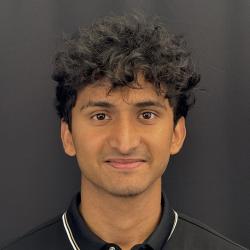
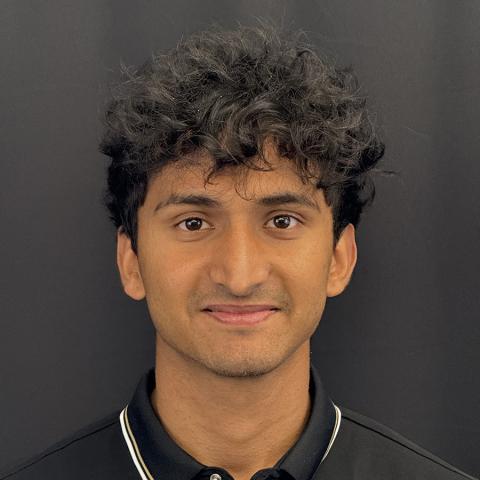
Summer Pandey is a junior international student from Nepal, pursuing a double major in data science and computer science with a minor in mathematics.